
A Guide to Extra Place Race Dutching
12 min read
Stephanie Sorrell
29 Oct 2026

Quick answer: it’s possible to use dutching techniques on extra place races to improve your position, and in theory to lock in a profit. However, this is difficult to do and can involve significant risk, so many bettors may find a more traditional Extra Place Matched Betting or Value Betting strategy to suit them better.
Horse racing is a popular sport for Matched Betting, as well as for recreational betting. It goes on all year round, is unpredictable enough to be exciting, and also, crucially, is very popular for bookie offers.
Data Insight
The Gambling Commission found that 4% of adults in Great Britain had participated in horse-race betting in the four weeks covered by its July–October 2025 survey, demonstrating the perennial popularity of betting on horse racing.
Extra place races are an extremely common offer, but the most simple ‘Bet £10 Get £10’ Matched Betting technique is useless for taking advantage of them. There are other strategies you can use, however, and dutching on extra place races is one of them.
In this article, we’ll explore how dutching techniques can be used to make the most of extra place races, as well as looking at other strategies that can help you get the most out of this kind of offer.
What Is An Extra Place Race?
In horse racing, each race will have a number of places that will pay out if you place a bet on them. The larger the number of runners, the larger the number of paid places.
Most commonly, a race will feature three paid places (1st, 2nd and 3rd), but races with a particularly large field may offer four paid places, and narrower fields may only have two places, or even one in rare cases.
A place is paid out at a certain fraction of the win odds. E.g. it might be paid at ¼ or ⅕ odds - this fraction will be shown on the racecard in question, as well as the number of paid places.
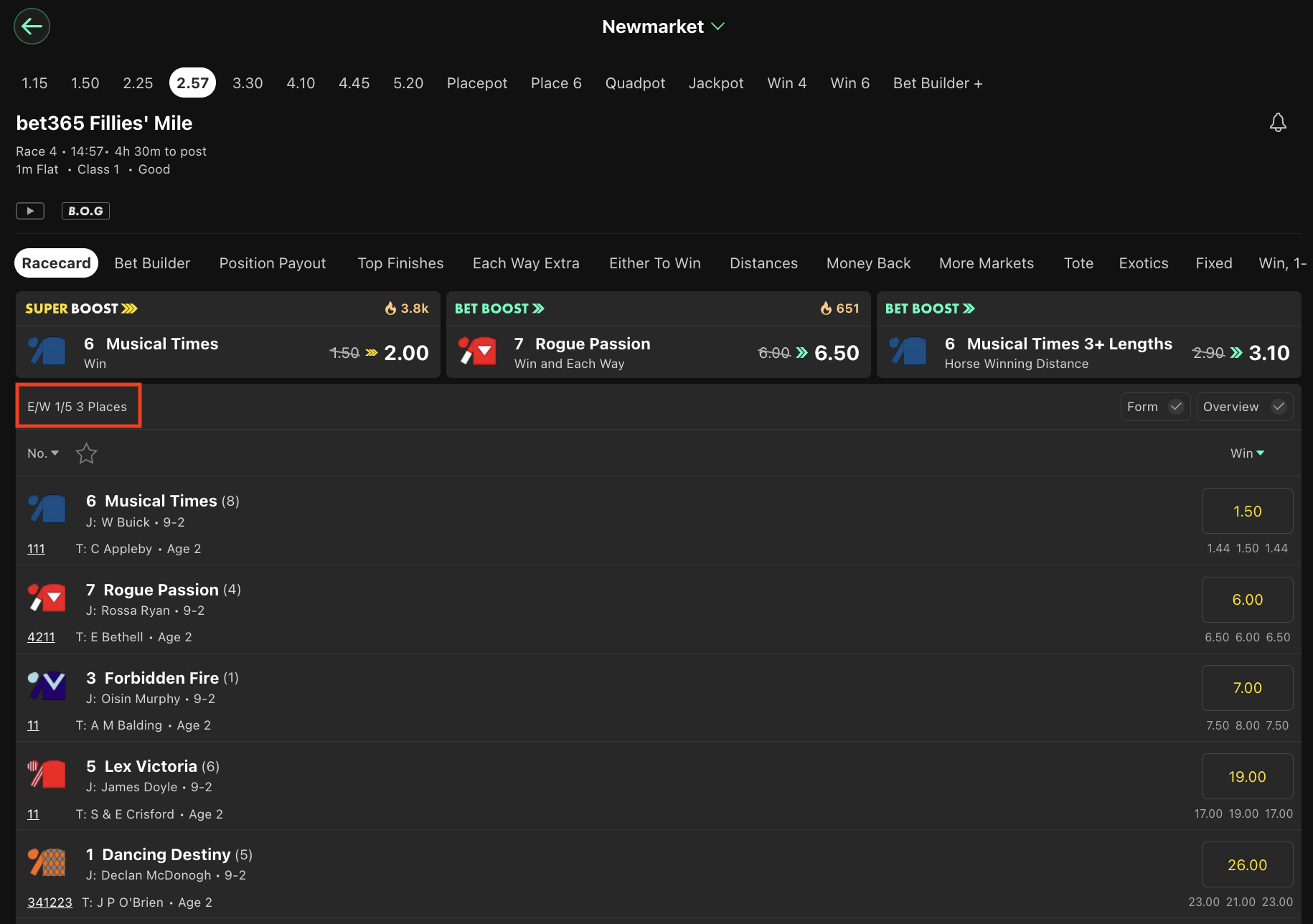
Most people will place an each-way bet in order to take advantage of the paid places. This is a bet in two parts; half on your horse to win, and the other half to hit one of the paid places.
For example, if you enter a £5 stake on your chosen runner and tick the ‘E/W’ box, your stake will be automatically doubled to £10 to account for both halves of your each-way bet.
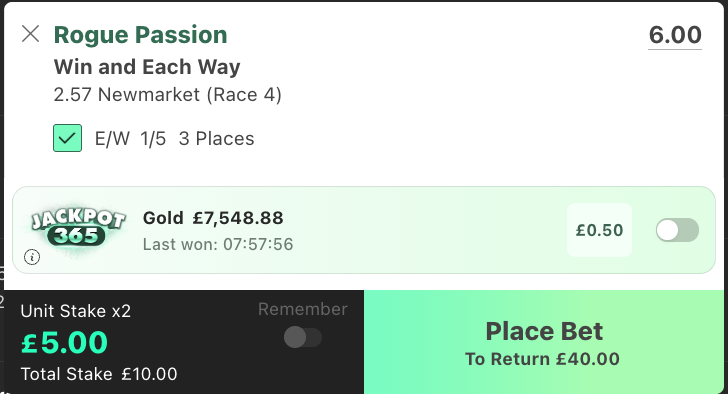
In extra place races, a bookie will increase the number of paid places, usually just by one, but occasionally two or even three for extremely high profile races, without changing the payment terms. Many bookies offer multiple extra place races each day to draw in extra customers and keep them betting.
Data Insight
The Gambling Commission’s research found that 76% of respondents who had received a gambling promotion went on to use it. For free bets specifically, 58% of respondents who had seen the offer took it up, highlighting the appeal of promotional betting offers to consumers.
There are several ways you can use sports betting strategies and techniques to take advantage of extra place races; read on to explore each of them.
First, though, we’ll quickly explain the principles of dutching, to help you understand how this technique can be applied to extra place races.
Dutching In A Nutshell
Dutching is a fairly simple concept - it involves betting on more than one selection in a single market, across multiple bookmakers. This improves your chances of winning a bet and, if you’re able to cover every possible outcome in a market, can even lock in a profit.
When dutching on horse racing, you’re very unlikely to be able to cover all outcomes due to the sheer size of the field in most races. This means that, in most cases, dutching will allow you to improve your chances of a win, but not to remove all risk or lock in a profit.
An example of a dutch bet
The most common choice bettors make when dutching on horse racing is to cover a handful of the favourites in a race in order to improve their chances of one of their bets winning.
Let’s imagine we want to dutch the race shown below (in reality, we’d be using different bookmakers, but we’ll use the odds shown here for ease).

We might decide to dutch our bets across the three favourites, Jojo Rabbit, Hi Lord and Pedros Dream.
| Runner | Odds |
|---|---|
| Jojo Rabbit | 4 |
| Hi Lord | 5 |
| Pedros Dream | 6.5 |
Entering these details into a dutching calculator, with a £10 stake for each selection, produces the following results:
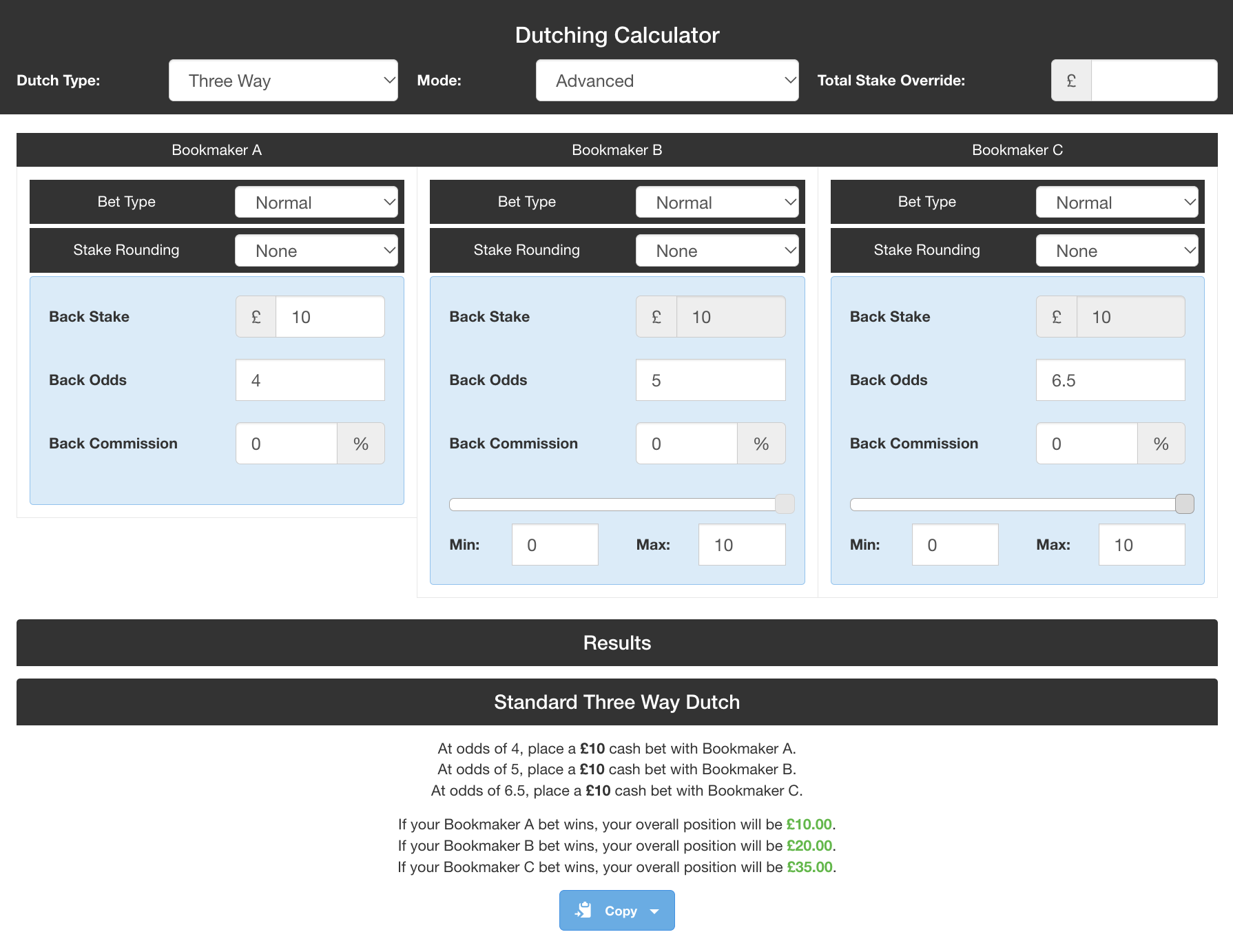
As you can see, we’ll end up making a profit if any of our runners goes on to win, but we’ll make the greatest profit if Pedros Dream, at the highest odds, is the winner. Of course, if another runner wins - not unlikely, given the size of the field - we’ll lose our entire £30 stake.
| Winning outcome | Odds | Stake | Return | Overall Profit |
|---|---|---|---|---|
| Jojo Rabbit | 4 | £10 | £40 | £10 |
| Hi Lord | 5 | £10 | £50 | £20 |
| Pedros Dream | 6.5 | £10 | £65 | £35 |
| Another runner | N/A | N/A | £0 | -£30 |
How Can You Use A Dutching Strategy On Extra Place Races?
Before we get started, it’s important to note that dutching an extra place race isn’t a beginner-friendly strategy: it’s relatively high-risk, requires a significant degree of experience, and involves quite a bit of time and maths.
In essence, this strategy involves placing each-way bets on the entire field in a race - or, at least, as much of that field as possible. You’ll aim to work out what the true odds would be for all runners (i.e. the odds that would represent an accurate probability of the horse winning), and to place bets at positive expected value wherever you can (i.e. at odds that are higher than the true odds).
Your stakes will need to be varied in order to balance your profits as far as possible - generally speaking, that means staking more money on runners at lower odds, and less money on runners at higher odds.
Having backed as many runners as possible - which may be the whole field, or just most of the field - you should assess your position. Work out your best possible position, your worst possible position, and the average, in order to decide whether you should adjust your stakes in order to balance things out more, or to avoid excessively high worst case scenario losses.
If you’re competent with spreadsheets (which is a definite advantage when using this kind of strategy), you may find it easiest to create a spreadsheet that allows you to enter your odds and stakes on each runner, and which will then automatically calculate your position depending on the outcome of the race, making it much easier to make adjustments to your staking and recalculate your results.
Expert Insight
‘The biggest danger with dutching a large-field race is confusing broad coverage with genuine risk control. Even if you back most of the runners, a cluster of losing outcomes can leave you significantly out of pocket. Model the result for every finishing position before staking, and pay particular attention to how much you could lose if none of your selections makes the frame.’
If this sounds like a complicated or intimidating strategy, that’s because it is! There’s no getting around the fact that dutching an extra place race is an advanced strategy. It involves a significant degree of risk, especially if you don’t manage to cover all runners, and extremely high stakes.
For experienced sports bettors who are comfortable with the risk and have a substantial bankroll, this strategy could well be a useful one, but we wouldn’t recommend that newer sports bettors take on a complex strategy like this.
If you’re newer to sports betting, or simply prefer to limit your risk, read on to find out about other strategies you can use on extra place races to optimise your results.
Other Strategies To Take Advantage Of Extra Place Races
Dutching an extra place race can be a highly profitable strategy, but it can also be complicated and time-consuming. For anyone who isn’t already a competent statistician and an experienced bettor, it’s likely that a somewhat more beginner-friendly strategy will be easier for them to execute successfully.
Fortunately, there are other ways you can take advantage of extra place races, with varying degrees of risk, depending on your preferences. Check out our dedicated guide to extra place races for a full breakdown of how you can take advantage of them - for now, we’ll take you through the basics of each option.
Expert Insight
‘An extra place is only valuable when the additional payout potential justifies the price you're paying for it. Compare the place terms with the available odds and your own estimate of the horse's chances of finishing in the expanded places. A bigger place offer can look attractive on paper while still representing poor value if the odds have shortened accordingly.’
Full lay
This is the lowest risk option, and involves fully backing and laying your bets with traditional Matched Betting techniques.
With this strategy, you place an each-way bet on an extra place race with a bookie, and then lay both the win and the place (to the standard number of places) with a betting exchange.
If your runner wins, hits one of the standard places, or fails to place, you’ll typically make a small qualifying loss. However, if your horse hits the extra place, both the place part of your back bet and both parts of your lay bet will win, making you a sizeable profit.
| Horse finishing position | Bookmaker each-way bet | Betting exchange lay bet | Overall position |
|---|---|---|---|
| 1st | Win part winsPlace part wins | Win lay bet losesPlace lay bet loses | Qualifying loss |
| 2nd-4th | Win part losesPlace part wins | Win lay bet winsPlace lay bet loses | Qualifying loss |
| 5th (extra place) | Win part losesPlace part wins | Win lay bet winsPlace lay bet wins | Profit! |
| 6th or lower | Win part losesPlace part loses | Win lay bet winsPlace lay bet wins | Qualifying loss |
It isn’t very likely for a horse to hit the extra place specifically, of course, so more often than not you’ll make a qualifying loss. However, the profits you make when you do hit that extra place are more than large enough to compensate, making this a great, low-risk strategy with potential to make you excellent profits in the long run.
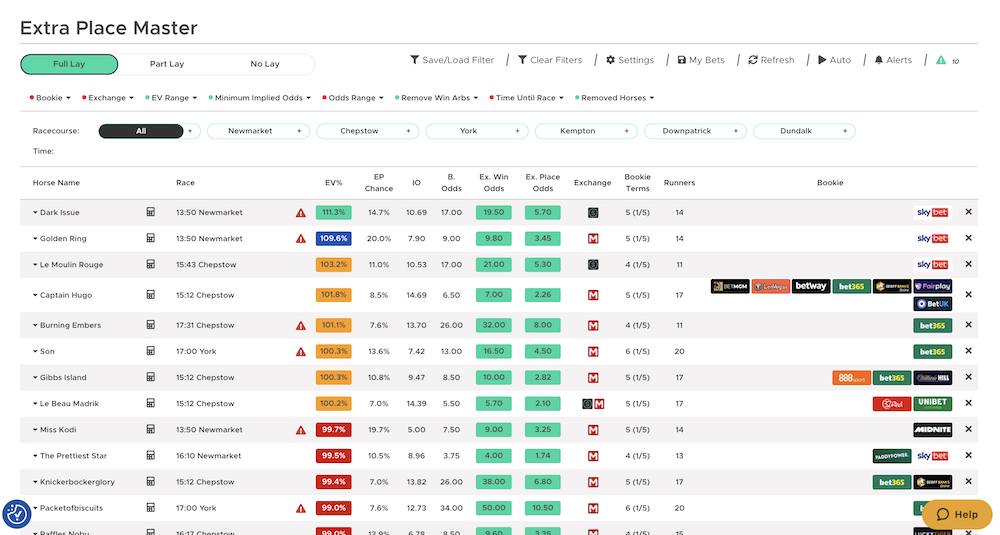
Outplayed’s Extra Place Master makes it incredibly easy to find good selections for this strategy, and guides you through exactly how to place your bets, as well as telling you the profits you can expect to make depending on the outcome of your bet.
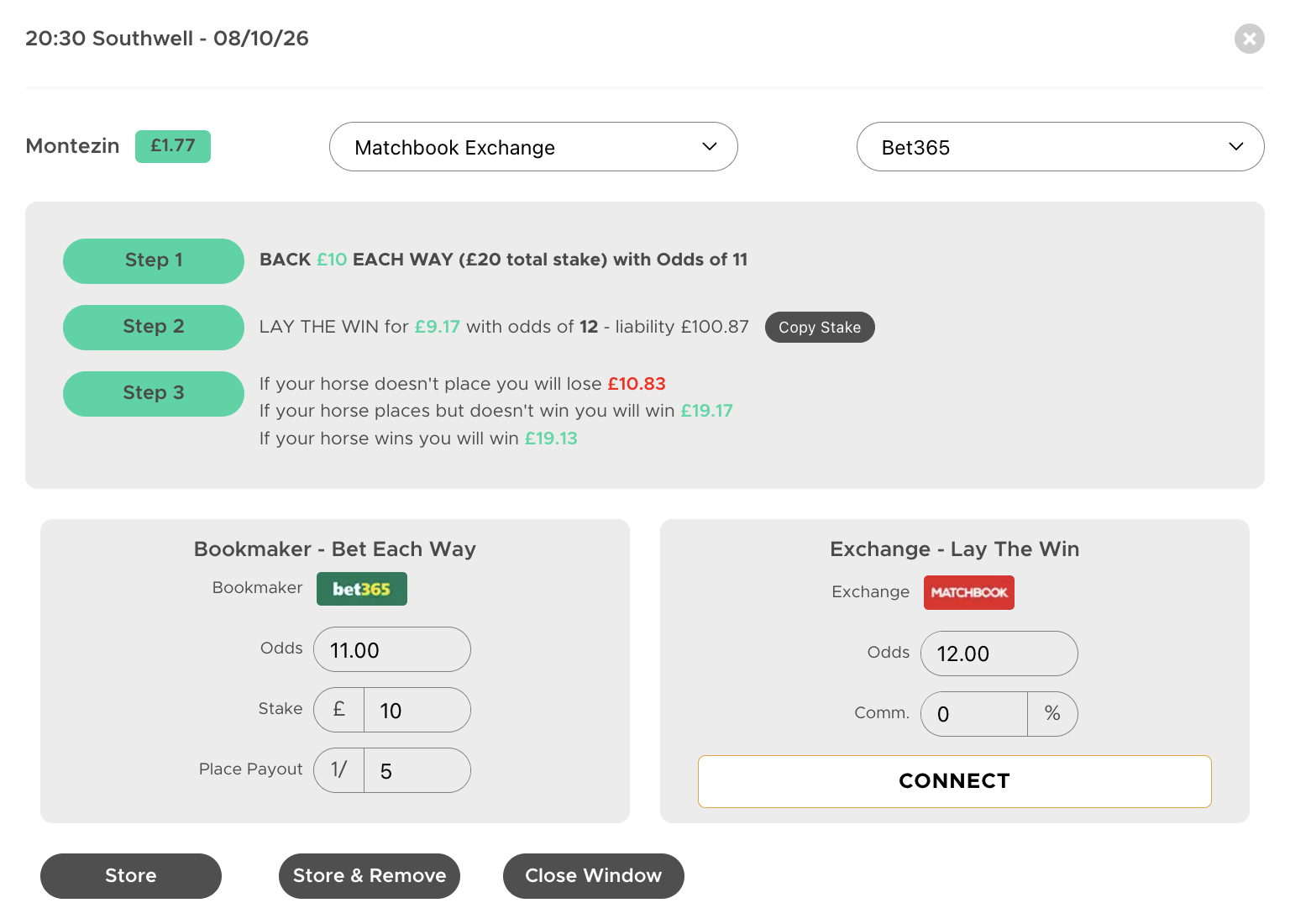
Part lay
By laying only part of your bet, you can increase the potential value - although you also increase your risk, so this strategy is better suited to advanced bettors with a large bankroll.
When using the part lay strategy, you lay only the win part of your bet, leaving the place part open. This means that you stand to profit if your horse hits any paid place (including 1st), not just the extra place.
If your horse finishes outside the paid places, however, your qualifying loss will be much higher than with the full lay method, so this is a significantly higher risk strategy.
An example of the possible results you might see when placing a part lay bet with the help of Outplayed’s Extra Place Master are as follows:
No lay
This is the highest risk of the three options, but holds the greatest potential value. We recommend that you only embark on this method if you’re an experienced sports bettor with a good bankroll, as you could experience significant downswings that you’ll need to be able to ride out.
As you might have guessed, the no lay option involves placing no lay bets at all; your strategy is based on placing each-way bets on horses that hold positive expected value, especially in the place part of your bet.
The Extra Place Master highlights runners whose odds make them a worthwhile choice. Statistically speaking, consistently betting on these over-valued horses is likely to result in your making profits in the long run, even though any individual bet may win or lose.
An example of a potential Each Way No Lay (often shortened to EWNL) bet is shown below:
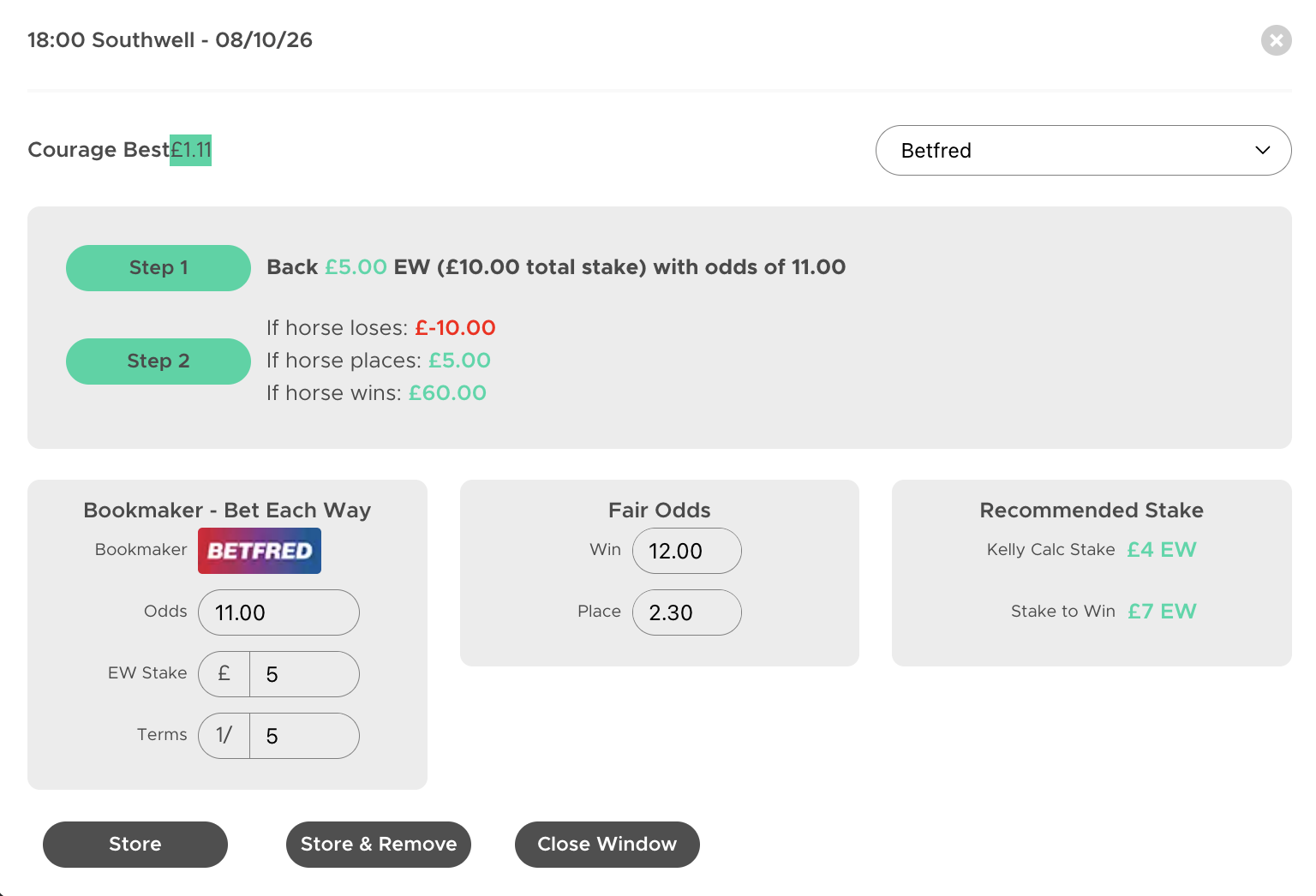
As you aren’t laying your bets, you lose your full stake if your horse fails to place, which is why this is a much higher risk strategy than the previous two described. However, many experienced Outplayed members have had a lot of success with this strategy, so if you’re ready to take on advanced extra place strategies, it’s certainly worth considering.
Summary
Dutching can be a profitable strategy for extra place races, but it’s best left to advanced bettors who really know what they’re doing.
If you’re newer to sports betting, or if you’re just more risk-averse, then there are much safer ways to take advantage of extra place races. With Outplayed’s Extra Place Master, you can choose the degree of risk that suits you, from the very low-risk full lay mode, to the higher-risk and higher-value no lay mode.
Get access to the Extra Place Master, plus other Value Betting tools, casino offers, and our full range of Matched Betting tools, with an Outplayed Pro membership.
Alternatively, if you’re not sure which membership level is right for you, you can always take out our free trial to gain access to 40+ sign up offers worth over £800 in profit, so you can see for yourself what Outplayed membership can do for you.
sign up nowFAQs
1. Can I use dutching to lock in a profit on any extra place race?
Probably not - it’s actually pretty rare to be able to lock in a profit by dutching on horse racing. However, you can give yourself a great chance of turning a profit with dutching techniques, or use lower-risk strategies to make a potentially smaller profit.
2. Is dutching extra place races beginner-friendly?
No, this is definitely an advanced strategy that isn’t suitable for beginners. If you’re new to sports betting, Matched Betting is a much better place to start.
3. Is dutching legal?
Yes, dutching is completely legal, but bookmakers don’t appreciate dutch bettors. You should therefore take care to blend in with regular punters by sticking to popular events and using rounded stakes.
4. Can dutching get my account restricted?
It’s possible, yes. If your betting behaviour makes it obvious that you’re dutching your bets, a bookie may respond by limiting your ability to take part in offers, limiting your stakes, or even banning you altogether.
5. Can I dutch my bets on sports other than horse racing?
You can indeed! You can in theory dutch a bet on any sport, but football and tennis are particularly popular choices for dutching.
Updated: 29 Oct 2026