
How To Get Started With Hedge Betting
10 min read
Stephanie Sorrell
23 Sep 2026

Quick answer: if you’re already a sports bettor, you can start hedge betting right away by looking for potential hedges on your existing bets. For new sports bettors, you may wish to build experience, perhaps by Matched Betting, before launching into hedge betting.
Many of us will have a vague idea of the concept of hedge betting, without necessarily understanding exactly how it works, or how you can put it into action.
But hedging a sports bet can be a highly useful technique to incorporate into your overall strategy. Given how few bettors actually turn a profit, it’s crucial to evaluate any strategy that can improve your chances of actually making money from sports betting.
Data Insight
Research by the Gambling Commission found that just 25.42% of active customer accounts with gambling operators were in a net profit position, illustrating that turning a profit from betting is far from the norm.
In this article, we’ll take you through how hedge betting works, how you can get started with a hedge betting strategy, and the risks and pitfalls it’s important to be aware of when you’re a new hedge bettor.
How Does Hedge Betting Work?
Hedge betting is pretty simple in principle: it involves placing one or more bets on outcomes that oppose your original bet, in order to either minimise potential losses or to lock in a profit.
The technique relies on odds changing over a period of time, creating a situation where odds opposing your original bet become more favourable and thus making a hedge bet worthwhile.
This shift in odds might occur over a long period, e.g. over the course of an entire football season, if you’ve placed a bet on the outright winner at the start of the season. But it’s also possible to find hedge betting opportunities in much smaller spans of time, such as over the course of a match as momentum swings between teams or players.
An example of a hedge bet
To illustrate how a hedge bet works in practice, we’ll look at an example.
Shortly before the start of the US Open, you decide to place a bet of £100 on Novak Djokovic to win the tournament. The odds are at 12, so he’s far from the most likely winner, but you like his chances even so.
Sure enough, Djokovic plays brilliantly through the tournament, and makes it to the final. To everyone’s surprise, both of the favourites were out by the quarter-finals, so Djokovic is due to play Alexander Zverev, who scraped through the semi-finals despite a knee injury.
With Djokovic in such good form, he’s now the favourite to win the tournament, but you’re starting to feel a bit nervous. Zverev is still a formidable opponent, and you’ll be down £100 if he wins the match.
So you decide to see if you can hedge your bet. You find odds of Zverev to win the tournament at 2.1, and when you enter all the figures into a hedging calculator you realise you’ve got a fantastic hedging opportunity.
You therefore place a hedge bet of £180 on Zverev at odds of 2.1, which means that you’ll make a profit no matter that happens:
- If Djokovic wins, you’ll make a return of £1200 on your original bet. When you subtract your original stake (£100) and your hedge bet’s stake (£180), you end up with an overall profit of £920.
- If Zverev wins, you’ll make a return of £378 on your hedge bet. When you subtract your original stake and your hedge stake, you end up with an overall profit of £98.
You’re still best off if Djokovic wins, but you’ve now put yourself in a position where none of your own money is at risk, and you’ll make a profit regardless of who ends up winning the tournament.
| Outcome | Odds (at time of bet) | Stake | Return | Overall profit |
|---|---|---|---|---|
| Djokovic wins | 12 | £100 | £1200 | £920 |
| Zverev wins | 2.1 | £180 | £378 | £98 |
How Do You Get Started With Hedge Betting?
If you’re already a recreational sports bettor, all you have to do to get started with hedge betting is to keep an eye out for potential hedging opportunities on your existing bets.
Generally speaking, if your selection looks more likely to win now than it did when you placed the bet, you may be able to find a hedging opportunity that allows you either to lock in a profit or at least to minimise any possible losses.
It therefore pays to look out for news that could affect the outcome of any bets you’ve placed (e.g. player injuries, management changes, unexpected weather), as any change to the likelihood of a win for your bet may create favourable hedging conditions.
The process of placing a hedge bet is as follows:
1. Place your initial bet
When you perform this step, you may not have decided whether or not you want to hedge it later on. However, it can be helpful to consider the possibility of a hedge at the time, and under what conditions you would intend to hedge it. If you’re placing a longer term bet (e.g. at the start of a season on the outright winner), it’s more likely that an opportunity to hedge your bet will crop up.
Expert Insight
‘The strongest hedge decisions are usually made before the pressure arrives. Decide what odds movement or change in your position would justify a hedge while you’re still thinking objectively. That gives you a framework to follow later, rather than allowing the excitement of a live event to dictate your decision.’
2. Look for a hedging opportunity
Once your bet is placed, you’ll need to keep your ear to the ground and check how the odds are shifting as the event grows closer. The better your selection’s chances are looking, the more likely it is that you’ll find a good opportunity to hedge your bet.
You can also look for hedging opportunities when the event is in play. If momentum shifts in your team’s direction, that could be a good time to hedge your bet.
3. Decide on your opposing bet(s)
When a good hedging opportunity comes along, you’ll need to bet against your original selection. Whether you do so with another bookmaker (on the opposition) or lay your bet with a betting exchange, ideally you’ll put yourself in a position where one of your bets will win regardless of the outcome of the event.
4. Calculate your stake
Use a hedge betting calculator (or alternatively a Matched Betting or Dutching calculator, depending on whether you’re hedging with a betting exchange or another bookmaker) to work out the optimal stake(s) for your hedge bet. It’s up to you whether you aim to produce the same profit (or small loss) regardless of the result, or whether you hedge an amount that protects more of the profit from your original bet, while still improving your position if that bet loses.
5. Await the result
Once your bet is hedged, all that’s left to do is wait, secure in the knowledge that you’ve put yourself in a position where you’re content with the outcome no matter what happens.
What Risks And Downsides Does A Beginner Hedge Bettor Need To Know About?
Hedge betting is a strategy designed to minimise risk and potentially lock in profit, but that doesn’t mean it’s risk-free.
Below are some of the key risks and downsides to hedge betting you should take into account before you embark on your strategy:
- Risk of losing money. When you place your initial bet, you have no way to be sure how the odds will change, and it’s entirely possible that no hedging opportunity will occur, or that all you can do is somewhat mitigate your potential losses. For this reason, you should make sure you have a good bankroll before you start, and never bet more than you can afford to lose.
- Risk of getting carried away. Especially when betting in-play, it’s easy to get swept up in what’s happening, which can result in your decision-making being based on emotion, not logic. In-play betting is also particularly associated with problem gambling, which would be catastrophic for a successful hedge betting strategy.
It’s therefore a good idea to decide in advance on the odds that would make a hedge bet worthwhile, rather than deciding in the moment and risking making a poor decision.
Data Insight
UK Gambling Commission research found that people who bet in-play weekly were more than three times as likely to have a Problem Gambling Severity Index score of 8 or more than those who bet in-play less frequently.
- Reduced profits. When you hedge a bet, you immediately reduce the potential profit you can make from your original bet. If you’re otherwise implementing a Value Betting strategy, that reduction could make it more difficult to achieve the expected value of your bets.
Expert Insight
‘A hedge shouldn’t be judged simply by whether it produces a profit on that particular bet. The better question is whether the price you’re accepting represents a sensible trade-off between reducing exposure and giving up potential upside. Repeatedly hedging at poor prices can quietly undermine an otherwise profitable betting strategy.’
- Required time and expertise. Hedge betting is most effective when you’re able to devote a reasonable amount of time to your betting, and when you’re able to put a good amount of sports knowledge and expertise to use. If you’re short on time, or if you’re a relative newbie, you’re more likely to make poor hedging decisions that reduce or even eliminate your profit.
| Risk | Why it matters |
|---|---|
| Losing money | Without a strong starting bankroll, losing money could put an end to your sports betting career |
| Emotional decision-making | Deciding based on emotion rather than logic will never lead to successful hedge betting |
| Reduced profits | Making money is the name of the game! If you’re a value bettor, letting each bet play out may suit your strategy better |
| Requirement for time and expertise | If you’re a beginner, or strapped for time, you may not have the resources or knowledge to hedge bet successfully |
Are There Any Other Strategies You Can Use To Make Money From Sports Betting?
There are some other fantastic strategies out there that will allow you to make money, some of which will allow you to lock in a profit on a sports bet, just like hedge betting, but without the initial risk.
Matched Betting
At Outplayed, we’re the experts in Matched Betting, so it’s no surprise that we consider it to be the very best strategy out there, especially for beginners.
Matched Betting involves placing bets both for and against the same outcome, similarly to hedge betting. However, Matched Betting hinges on using bookmaker offers to turn these matched bets into profit in what is typically a two-step process.
First, you place what’s known as a ‘qualifying bet’, which you use to unlock a reward such as a free bet. You match this bet with a lay bet at a betting exchange, and you typically make a very small loss, known as a qualifying loss.
Then you repeat the process with the free bet you’ve unlocked, usually making a profit of 70-80% of the value of your free bet.
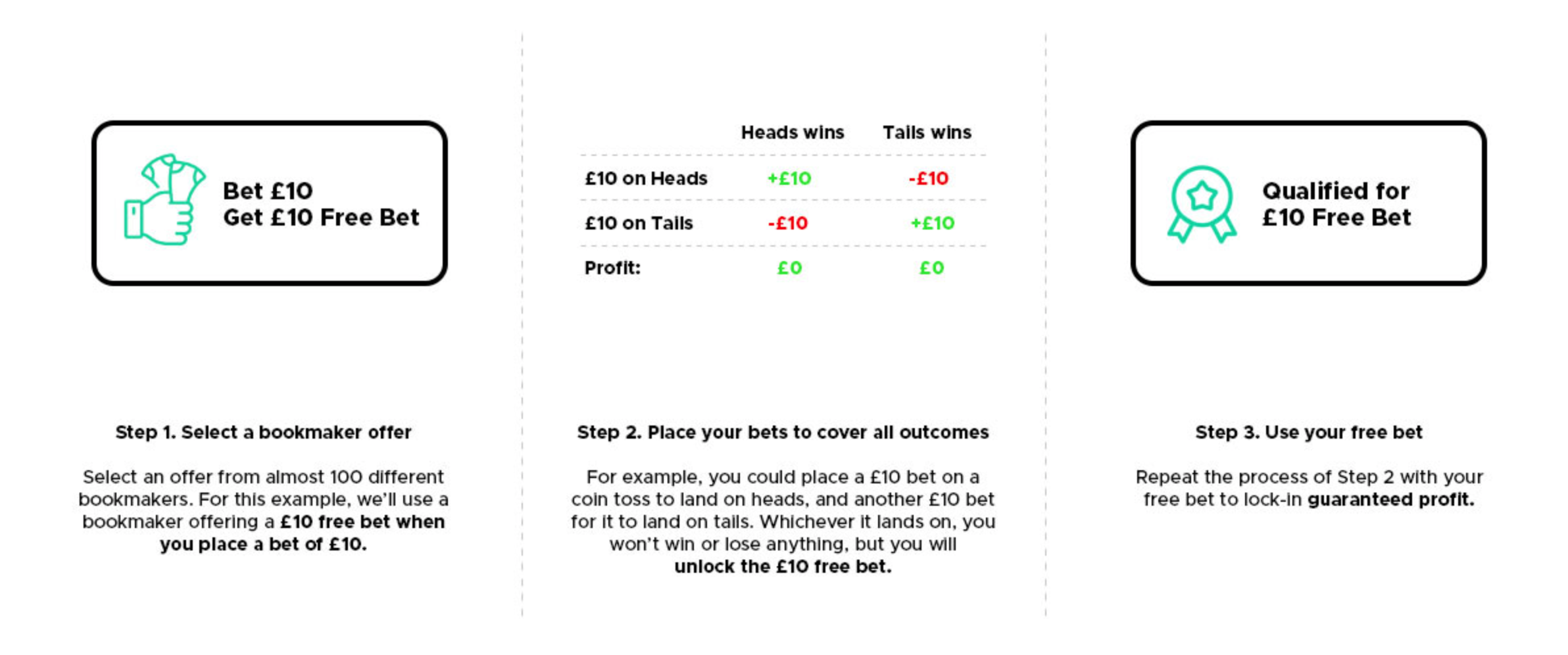
Matched bettors can make hundreds of pounds a month from this technique, with minimal risk of any losses, making it one of the best side hustles out there.
To find out more, take a look at our Beginner’s Guide to Matched Betting for a full breakdown of the process and how you can get started.
Arbitrage Betting
Arbitrage betting is another very similar technique, which again involves placing bets for and against the same outcome.
The trick to arbitrage comes in finding pairs of disproportionately favourable odds that allow you to lock in a profit with every single bet.
Most commonly in the UK, this involves placing a back bet with a bookmaker and a lay bet with a betting exchange. If the odds for your back bet are higher than those for your lay bet, you’ve got an arbitrage bet, which will generate you a profit regardless of the outcome of the event.
To find out more, take a look at our dedicated guide to arbitrage betting for all you need to know about how this strategy works.
Value Betting
Value Betting is a more advanced strategy than arbitrage betting or Matched Betting, but it can pair well with hedge betting. Because it does involve risk, we recommend that bettors have significant experience of sports betting, and that they’ve built up a strong bankroll before they get started.
Once you’re in that position, though, Value Betting can provide a massive boost to your profits. It relies on a similar principle to arbitrage betting - that of locating favourable odds from bookies. Specifically, odds that are higher than the true probability of a win would imply.
By betting exclusively on selections with disproportionately favourable odds, you’re statistically likely to end up profiting overall, even though you aren’t locking in a profit on any individual bet.
To find out more about how Value Betting works and how you can get started, check out the dedicated Outplayed guide.
Summary
For newcomers to hedge betting, getting started can seem overwhelming - but if you’re already a recreational sports bettor, it can be as simple as keeping an eye on your existing bets for possible hedging opportunities.
If you’re brand new to sports betting altogether, though, you might be better off starting with Matched Betting, which will allow you to gain more experience without the risks that go with hedge betting.
To find out more, check out the Outplayed Beginner’s Guide to Matched Betting for all the information you need to get started.
Or if you’re already raring to go, sign up for our free trial to gain access to 40+ bookmaker sign up offers, worth £800+ in potential profit.
sign up nowFAQs
1. Is hedge betting a good strategy for beginners?
Hedge betting is certainly possible for beginners, but it might not be the best strategy if you’re just starting out with sports betting, especially if you haven’t yet built up a good bankroll. We’d definitely recommend starting out with Matched Betting as a beginner.
2. Can you guarantee a profit with hedge betting?
In some cases it is possible to lock in a profit - but you can’t know that this will become possible when you place your initial bet. This means that a hedge betting strategy will always involve a level of risk, which can be significant.
3. Should I hedge every bet?
Not necessarily. When you hedge a bet, you reduce your return if your original bet wins. If you’re using a Value Betting strategy, this can have a significant impact on your success.
Yes, hedge betting is completely legal. That said, bookmakers aren’t generally keen on strategies that involve reducing risk, so make sure you don’t hedge a bet at the same bookmaker you used for the original bet.
5. How much can I make from hedge betting?
That all depends on how much of your time and bankroll you devote to it! There’s no real limit to the potential profits from hedge betting - the more money you devote to it, the more you’re likely to make.
Updated: 1 Oct 2026