
A Complete Guide To Hedge Betting Strategies
10 min read
Stephanie Sorrell
23 Sep 2026

Quick answer: hedge betting is an advanced sports betting strategy used to minimise potential losses or even lock in a profit. There are certain strategies bettors can use to get the most out of hedge betting, and including in-play betting, betting on futures, partial hedging, middling.
Sports betting is a perennially popular activity in the UK. And yet most bettors lose more money than they make - with one study by the Gambling Commission finding that 72.54% of active betting accounts are in a net loss position. And all that cash goes straight into the bookies’ pockets.
Data Insight
In the 2025 Gambling Survey for Great Britain, just 42% of bettors surveyed rated their most recent gambling experience positively, illustrating the bittersweet relationship many bettors have with gambling.
So how does anyone actually make any money from betting? Well, there are a few techniques that successful bettors employ, but hedge betting often forms an important part of a sports betting strategy.
In this article, we’ll look at how to hedge in betting, and how you can employ various hedge betting strategies to limit your risk and maximise your profits. We’ll also assess its advantages and disadvantages, and throw in a few alternative strategies that can help every bettor, no matter their level of expertise, to streamline their strategy.
What Is Hedge Betting?
Hedge betting is the technique of placing an opposing bet to your original bet in such a way as to improve your position, either by limiting potential losses or by locking in a profit.
Typically, hedge betting relies on odds changing over a certain period of time, so that the odds opposing your original bet are more favourable when you place your hedge bet, thus making it possible to create a more secure position for yourself.
For all the details about hedge betting, take a look at our dedicated guide - but for now, we’ll just give you a quick example of how hedge betting works to illustrate the process.
An example of a hedge bet
Early in the football season, you bet £50 on Tottenham to win the FA Cup, at odds of 21.
Tottenham go on to have a fantastic season and end up in the final against Arsenal, who had been the original favourites to win.
You still like Tottenham’s chances, but you’re a little worried that they might fall at the final hurdle, leaving you down £50.
So you decide to hedge your bets. You bet £200 on Arsenal to win the final at odds of 1.95, which allows you to emerge in profit regardless of who ends up winning.
| Outcome | Stake | Odds | Return | Overall profit |
|---|---|---|---|---|
| Tottenham win | £50 | 21 | £1050 | £800 |
| Arsenal win | £200 | 1.95 | £390 | £140 |
As you can see from the above table, you’re still best off with a Tottenham win, which will make you an overall profit of £800 (a £1050 total return, minus your stakes of £50 and £200), but even an Arsenal win will make you a respectable £140 profit.
Alternative Ways to Hedge a Bet
People usually think of placing an opposing bet at another bookmaker when they consider hedge betting (which is a form of dutching), but you can also hedge your bet with a simple lay bet at a betting exchange, just as you would when Matched Betting.
This can often be the very easiest way to hedge a bet, as you can be confident that your lay bet directly opposes your back bet, and you can work out your stakes with a straightforward Matched Betting calculator.
And if you no longer have much confidence at all in your original bet, and are looking to hedge it just in order to limit the damage, you can also consider cashing out, or partially cashing out, your original bet.
This should be considered a last resort, however, as bookies profit significantly from cashed out bets and it’s likely that you’ll end up worse off than you would with a traditional hedge or lay bet.
Data Insight
A 2024 study of 224 adults who had bet on sports in-play found that 51.8% had used the cash-out feature. Participants cited cutting losses and accessing money immediately among their main reasons, showing why cash-out can be tempting when a bet starts moving against you.
What Are The Best Hedge Betting Strategies?
If you’re planning to incorporate hedge betting into your sports betting, you might intend simply to keep an eye on any existing bets you’ve placed to see how the odds shift in the run up to the event, and in-play.
However, there are certain strategies you can employ to make your hedge betting more successful, and to increase the chances of hedge betting opportunities cropping up.
Some of the most common are as follows:
Futures and outrights
Betting on long term markets, such as the player or team to win a season or tournament, can be a great strategy to allow for hedging possibilities. If the team or player you choose does well, you’re likely to encounter some possibilities for profitably hedging as the finals grow closer. However, if your selection does poorly, you may find it more difficult to locate a good hedging opportunity to improve your position.
In-play betting
Odds tend to change with great rapidity when a match or fixture is underway. If you’ve bet on one team in advance, and momentum swings in their direction, a smart in-play hedge bet on their opponents can allow you to lock in a profit no matter who emerges the victor. Of course, in-play betting is also fast-paced and can be quite risky, so we’d recommend this strategy to more experienced hedge bettors rather than beginners.
Expert Insight
‘The biggest mistake with in-play hedging is making the decision while watching the match unfold. Set your target hedge price before the event starts, based on the return you’re willing to accept. That turns hedging into a predefined strategy rather than an emotional reaction to momentum.'
Partial hedging
Depending on your read of a particular match or event, you may decide to hedge only a portion of your original bet. This may mean that you still profit only if your original bet wins, but it can minimise your exposure from your original bet while protecting its potential profit.
Middling
This strategy is particularly favoured in the US, where Point Spread markets are very popular, but it can be applied to UK markets too. It involves placing two bets (with different bookmakers) on a totals market, such as Over/Under. For example, you might place one bet on there being Over 1.5 goals in a match, and a second bet on there being Under 2.5. If exactly 2 goals are scored, you win both bets - and if not, at least one of your bets will still win, minimising any losses.
Accumulator hedging
This is a fairly risky strategy, as it relies on several legs of your acca winning before you can hedge your bet. However, if you’ve placed, say, a 4 leg acca, and your first three bets have all won, you’ll be in an excellent position to hedge the final leg. Because the total odds for your acca will be much higher than an opposing bet on just the final leg, you’ll end up in a position to make a solid profit no matter what happens in the final match.
Are There Any Other Ways To Mitigate Risk Or Lock In Profits From Sports Betting?
As you’ll no doubt have spotted from the above section, most hedge betting strategies do involve a significant degree of risk, especially when you place your original bets, even if you’re later able to mitigate that risk.
For many people, this will be more than enough to put them off hedge betting. But are there any other strategies that make it possible to lock in profits without having to accept significant risk up front?
The answer is yes: Matched Betting is the perfect strategy for anyone uncomfortable with the risk of traditional sports betting, who’s keen to find a way to make profits in greater safety.
Like hedge betting, it involves placing opposing bets on a single market, limiting any risk and making it possible to lock in a profit. However, you achieve this by seeking out close matches and placing both your opposing bets (your back bet and your lay bet) at the same time.
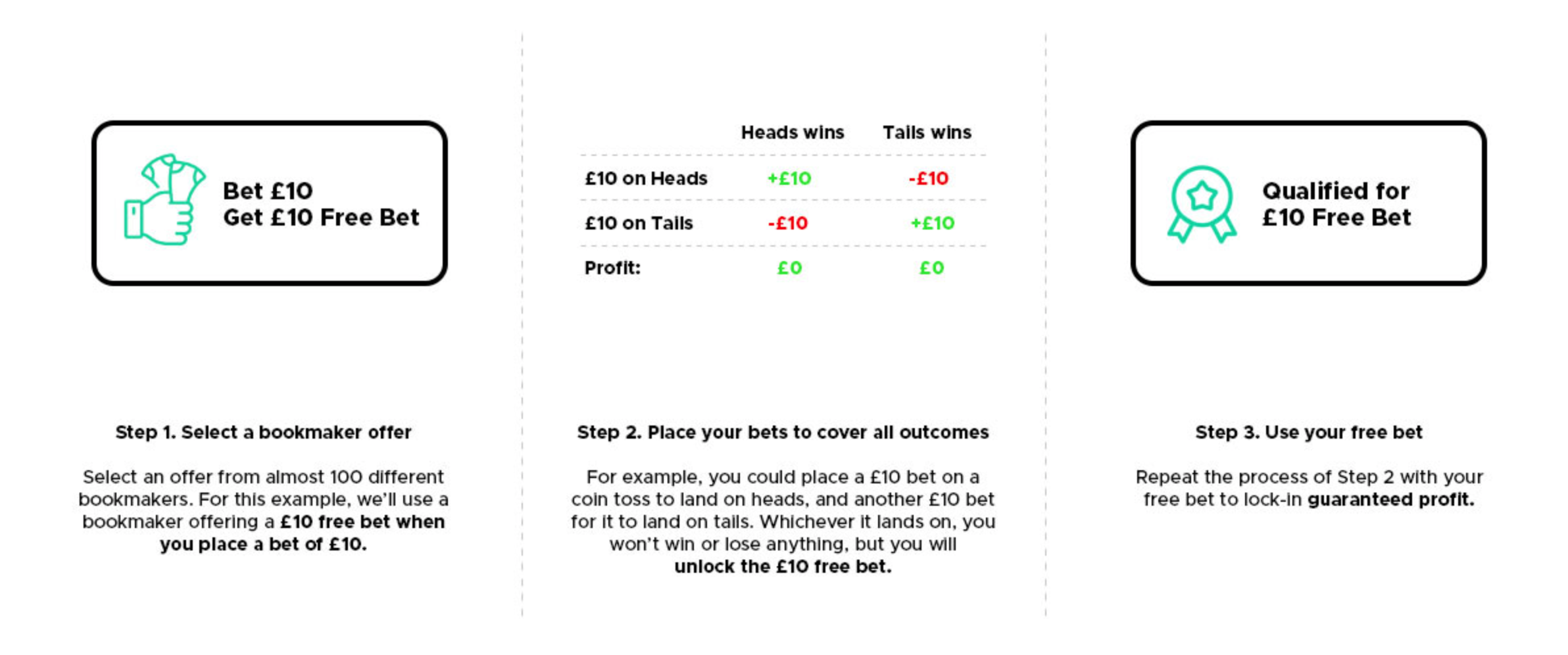
Matched Betting relies on the use of bookmaker offers, which reward you with freebies like a free bet if you place a bet with your own money. First, you place a qualifying bet with your own money, matching it with a lay bet at a betting exchange, so that you typically make a small loss of a few pence.
This qualifying bet then unlocks your free bet. By repeating the process of placing and matching your free bet, you can lock in a profit no matter what happens.
For a full breakdown of exactly how Matched Betting works, take a look at our Beginner’s Guide - or if you like what you’ve seen so far and want to get going right away, take out our free trial to get started.
What’s The Difference Between Hedge Betting And Matched Betting?
In many ways, hedge betting and Matched Betting are extremely similar techniques. Both involve the use of opposing bets to mitigate losses, or to lock in a profit.
However, Matched Betting differs in that it involves finding close matches of odds at the same time, and making money from the free bets that bookies offer customers.
Hedge betting, however relies on the odds shifting in such a way that the bettor has an opportunity to improve their position as a result, or at least to mitigate the risk of their bet.
What Are The Advantages And Disadvantages Of Hedge Betting?
| Advantages | Disadvantages |
|---|---|
| Risk mitigation | No guarantee of hedging opportunity |
| Potential for locked in profit | Risk |
| Security | Reduced profits |
| Added margins (by contributing to more than one bookie's margins) | |
| Time and effort | |
| Not beginner-friendly |
Expert Insight
‘A hedge should be judged on the price you’re getting now, not on how much you originally staked. If the opposing odds have become poor, hedging simply because you want to remove the anxiety of the original bet can destroy more value than it protects. Sometimes the best hedge is no hedge at all.’
Tips And Tricks For Successful Hedging
- Place your initial bets with care. You can’t assume that your bet will become a hedging opportunity, so try to ensure your bets hold positive expected value regardless of whether you intend to hedge them if possible.
- Make use of betting exchanges. It’s often easier to use a betting exchange to lay a bet than it is to find suitable opposing odds at another bookmaker. Plus, Outplayed members enjoy 0% commission with exchanges including Smarkets and Matchbook, maximising the value of your hedge.
- Do your research. Hedge betting isn’t a strategy you can embark on without a solid knowledge of the sports and markets you’re betting on. If you plan to hedge your sports bets, you’ll want to be an experienced sports bettor willing to invest time and energy into your strategy.
- Use a calculator. To make sure you get your stakes and expected profits right, use a calculator! Outplayed’s Matched Betting and Dutching calculators can be used for hedges with a betting exchange and another bookmaker respectively, making sure you know exactly what you stand to make when you hedge your bet.
- Keep a close eye on your bets. Once your initial bet is placed, you’ll need to watch the odds (and the news) as the outcome of your bet draws closer. If the odds shift in a way that makes a favourable hedge likely, you don’t want to miss out on an opportunity.
Summary
Hedge betting often sounds intimidating, but with the right strategy it can be an incredibly useful tool in the shed of the sports bettor.
That said, it is best suited to advanced bettors who know the sports they bet on well, as they’re most likely both to find hedging opportunities and to know when to make use of them.
If you’re not sure about trying out hedge betting, that’s fine! You can still make profits from sports betting in other ways, and Matched Betting is the perfect choice for beginners, allowing you to lock in great profits with minimal risk.
To find out more, check out the Outplayed Beginner’s Guide to Matched Betting for all the information you need to get started.
Or if you’re already raring to go, you can sign up for the free trial right away to gain access to 40+ sign up offers worth over £800 in potential profit.
sign up nowFAQs
1. Can hedge betting guarantee me a profit?
Not necessarily. You can’t be sure when you place your initial bet that the odds will change favourably, so you might not get the opportunity to hedge that bet at all. It may in some cases be possible to lock in a profit, but you certainly shouldn’t rely on that.
2. Is hedge betting beginner-friendly?
It’s certainly possible to hedge a bet as a beginner, but we wouldn’t recommend that newcomers to sports betting immediately embark on a hedge betting strategy. Instead, we’d advise trying Matched Betting, which allows you to build up your bankroll while minimising any risk.
3. Is hedge betting the same as arbitrage betting?
While they’re very similar techniques, they’re not quite the same. Arbitrage betting relies on finding pairs of favourable odds that allow you to lock in an immediate profit, whereas hedge betting hinges on the odds changing over time, creating a hedging opportunity when the odds move in your favour.
Absolutely! Bookies aren’t too keen on it, so you certainly shouldn’t bet on both sides of a market with the same bookie. However there’s nothing legally wrong with hedge betting at all.
5. Should I hedge every bet?
It really depends on your tolerance for risk, and your intended strategy. But if you’re leaning towards hedging every bet you make, because you’re concerned about losing money, you might be better off with a strategy like Matched Betting or arbitrage betting, where profits are locked in when you place your bets so you don’t have to worry about potential losses.
Updated: 1 Oct 2026